

Designing the Perfect Minimalist Kids Play Area at Home: Calm, Safe, and Stylish
Introduction
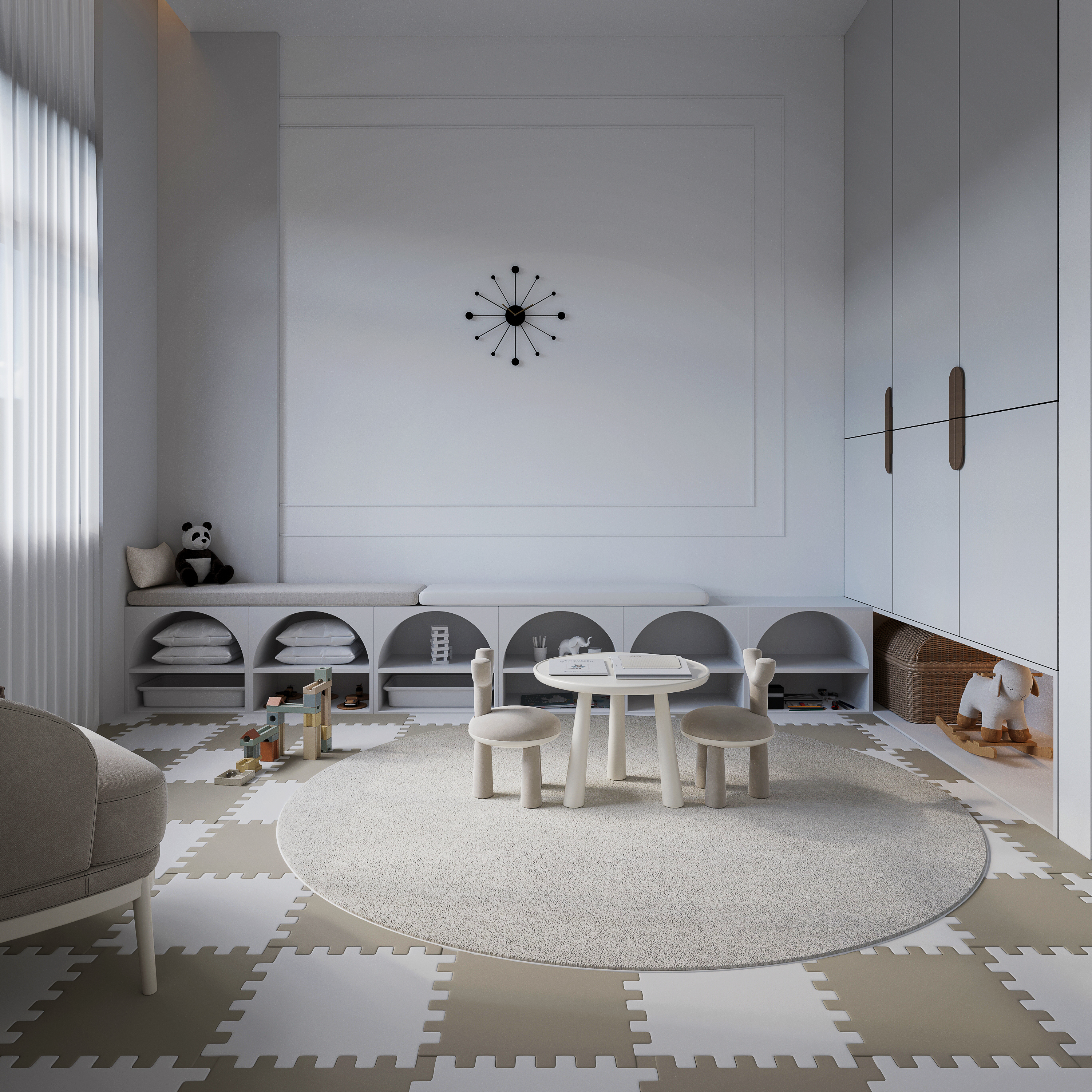
In the heart of every family home, a kids’ play area can become a magical space for imagination, learning, and growth. But modern families are increasingly leaning towards play spaces that are not just functional, but also aesthetically pleasing and calming. The playroom in the image above beautifully demonstrates how minimalist design can provide children with a nurturing environment that feels both safe and inspiring. In this article, we’ll explore how to create a play area like this in your own home—focusing on key elements such as neutral colors, clever storage, comfort, and creativity.
Why a Minimalist Play Area Matters
A dedicated kids’ play space with a minimalist approach offers unique benefits for both children and parents:
-
Encourages Calm and Focus: Soft tones and uncluttered spaces help children relax and concentrate.
-
Reduces Overstimulation: Minimal distractions promote longer, more imaginative play sessions.
-
Easy to Organize: Clever storage means toys and books have a home, helping maintain order.
-
Blends with Home Décor: The neutral palette and sleek lines fit seamlessly into any modern interior.
Planning Your Minimalist Kids’ Play Area
Before you start decorating, consider these planning essentials to achieve a similar look:
1. Choosing the Right Location
-
Natural Light: Position the play area near a window to maximize sunlight, just like in the photo.
-
Defined Zone: Use rugs or soft mats to visually separate the play space from the rest of the room.
2. Age-Appropriate, Flexible Design
This playroom is perfect for toddlers and young children, but its timeless color scheme and adaptable furniture ensure it can evolve as your child grows.
3. Multi-Functional Spaces
Minimalism doesn’t mean less function. The low bench with open cubbies, round table, and cozy rug create zones for reading, crafts, and free play—all in one harmonious space.
Safety First: Prioritizing Child-Friendly Features
The image perfectly illustrates essential safety features for a kids’ play area:
-
Soft, Cushioned Flooring: The interlocking foam mats and round rug absorb bumps and falls.
-
Rounded Furniture: Chairs and tables with smooth edges prevent injuries.
-
Accessible Storage: Low shelves make it easy for children to grab or put away toys independently.
-
No Clutter: Clean lines and open floor space allow safe, unrestricted movement.
Décor Ideas Inspired by the Image
This minimalist playroom is proof that “less is more” can be warm, playful, and inviting.
1. Neutral Color Palette
-
Shades of White, Beige, and Soft Gray: These calming colors help the space feel airy and open, suitable for both boys and girls and adaptable as tastes change.
-
Consistent Tones: Matching furniture and flooring keep the room visually unified.
2. Simple, Functional Furniture
-
Kid-Sized Table and Chairs: Central to the play area, these pieces invite drawing, playing, and group activities. Their unique design adds character without excess decoration.
-
Bench Seating with Storage: Doubling as a cozy reading nook and a spot for soft toys or pillows, this bench is both practical and inviting.
3. Minimal Accessories
-
Wall Clock: Adds a modern touch without clutter.
-
Plush Toys and Wooden Blocks: Provide play value and a hint of coziness while fitting the room’s neutral palette.
-
Baskets and Low Shelves: Hide away clutter and keep the space neat.
Smart Storage Solutions for a Tidy Space
One of the standout features of this playroom is its smart storage:
-
Open Cubbies: Great for books, blocks, and art supplies—children can see what’s available and put things back with ease.
-
Closed Cabinets: Hide larger or messier items, keeping surfaces clear and the space visually quiet.
-
Woven Baskets: Add texture and warmth while storing plush toys or blankets.
Activity Zones for Balanced Play
Though minimalist, the room is thoughtfully divided for different activities:
1. Creative & Artistic Play
The child-sized table is perfect for coloring, building, and crafts, providing a dedicated workspace.
2. Quiet Time
The cushioned bench and soft rug invite reading, daydreaming, or cuddling with a favorite toy.
3. Free Play
Open floor space, combined with safe flooring, encourages active games and building with blocks.
Incorporating Nature and Texture
-
Natural Light: Sheer curtains diffuse daylight, creating a bright yet soft atmosphere.
-
Textural Contrast: Foam mats, a round rug, a plush animal, and woven baskets offer different tactile experiences that stimulate young senses.
-
Wooden Toys: Add an organic, eco-friendly touch to the space.
Involving Children in the Space
Even in a minimalist playroom, it’s important to let kids feel a sense of ownership. Let them choose a favorite plush toy or display their latest drawing. This builds excitement and pride in their environment.
Maintaining a Screen-Free Zone
The design encourages open-ended, screen-free play with books, blocks, and art supplies within easy reach. This helps children develop focus, creativity, and problem-solving skills away from digital distractions.
Keeping It Fresh and Adaptable
Minimalist doesn’t mean static! Rotate toys, update books, or add seasonal decorations to keep the space interesting without losing its calming vibe.
Conclusion
A minimalist kids’ play area, like the one pictured, is a peaceful retreat that invites creativity, calm, and connection. By focusing on soft colors, child-friendly furniture, smart storage, and a few meaningful accessories, you can design a playroom that not only supports your child’s growth but also enhances your home’s style. Whether your space is large or small, remember: simplicity, comfort, and thoughtful design are the keys to a joyful play area.